From insights to implementation – influencing policy change
16 Dec 2025
The past year has been transformational for policy and Australia’s built environment. Alongside a federal election, we saw the delivery of major policies and long-awaited initiatives that have been years in the making.
At the core of this is GBCA’s purpose: to lead the sustainable transformation of the built environment. The Green Star tools are the most familiar expression of that purpose, providing governments with trusted rating tools to support leadership and decarbonisation efforts. But alongside this, our advocacy works to influence broader change, drawing on the strength of these tools and industry collaboration to support every level of government.
Government commitment to Green Star was clear this year, reflected in certified projects such as the Reef Authority headquarters in Queensland and community facilities like the new pavilion at Clyde Recreation Reserve, as well as in important policy decisions. It’s taken a collective effort to get to where we are today, and with the critical decade already underway, we will need that collaboration more than ever before. Before we embark on 2026, here are some of the major advocacy outcomes achieved this year.
Making every building count
Since its release in 2019, and subsequent update with the Property Council of Australia in 2023, Every Building Counts has remained a cornerstone of our advocacy. This year we saw significant progress across several recommendations, including:
- The release of Australia’s first National Climate Risk Assessment (NCRA) and National Adaptation Plan (NAP).
- The Built Environment Sector Plan (BESP) was released, which included confirmation of funding for NABERS, expanding NatHERS for existing homes, and updates to GEMS – all key recommendations.
- Expansion of the Commercial Building Disclosure (CBD) Program, a program championed by GBCA over many years.
- GBCA continued our strong advocacy for cross-jurisdictional commitment to updating and implementing the National Construction Code (NCC) as it became a focal point in the federal government’s spotlight on productivity this year. A pause to the introduction of NCC 2028 was announced, delaying this update until 2029. However, proposed updates to NCC 2025 were agreed by Building Ministers in October for implementation from 2026.
Building on ambition
Further into the year, alongside Property Council and Climateworks Centre, we released Built Environment Ambition in response to the announcement of the 2035 emissions reduction target and release of the BESP. This report demonstrated the tangible opportunities the built environment can contribute toward achieving Australia’s emissions reduction target for 2035 of 62 to 70% below 2005 levels. Most notably, this is an increased focus on supporting retrofits to existing homes and buildings at speed and scale in addition to other priorities detailed in the BESP.
On keeping it circular
GBCA’s A practical guide to circular procurement: for new buildings and major refurbishments, and the report, Australia’s waste[d] opportunity, released in partnership with Coreo, have helped us engage in conversations with all levels of government and provide practical information to help them deliver on circular goals. Reports like this are also a critical reference for submissions, such as those we provided to the Queensland and South Australian governments during consultations on updating waste strategies.

Alongside nature
Over the years GBCA has created a body of work to help define the role of the built environment in restoring nature and biodiversity, both in Australia and through global supply chains. Finding the balance between development and the protection and restoration of our environment is something that all governments grapple with. This work gained new relevance as the Australian Parliament recently passed significant environmental law reforms, and the South Australian Government introduced its first-ever Biodiversity Act earlier this year. The roadmap has supported our work with government and will remain essential as Australia moves to meet its environmental commitments while progressing critical infrastructure and housing delivery.
Embodied carbon & refrigerants
GBCA has played a key role in the multi-year effort to define and measure embodied carbon, advocating for a credible national framework and providing technical input into the development of the NABERS embodied carbon tool. Publications including Our homes weigh a tonne, A common definition for net zero infrastructure, and ASBEC’s Our upfront opportunity continue to shape government discussions.
This year also saw the release of Freeze frame: Refrigerants as long-term building infrastructure, produced with AIRAH. This report is already informing future policy work and will be central to engagement with government and across industry as we consider both immediate and long-term changes needed.
Translating policy into action across all levels of government
Across all levels of government, we have seen significant shifts in how governments plan to provide resilient, healthy and efficient buildings by transforming spaces and unlocking Australia’s built environment’s potential. Some of the most notable examples at state and local level include:
Local government
- The City of Melbourne released the Zero Carbon Lease – User Guide, supporting building owners and tenants to achieve carbon-neutral operations as part of Retrofit Melbourne.
- The City of Adelaide, alongside the SA Government, launched the Adaptive Reuse City Housing Initiative (ARCHI) to convert underused buildings into new homes.
- Brimbank Council achieved a 6 Star Green Star Design & As Built rating for the Brimbank Aquatic and Wellness Centre, while a review of its Climate Emergency Plan revealed a 78% reduction in operational emissions since 2020.
- City of Sydney announced planning controls to restrict use of gas appliances and new gas connections in new residential buildings, commercial buildings and hotels.
State government
- The NSW Government advanced its Net Zero Government Operations Policy and launched pilot projects to explore energy disclosure for existing homes, building on NatHERS, and CSIRO home energy rating trials.
- The Victorian Government introduced new electrification and energy standards for Victorian buildings, including for new build homes and commercial buildings, rental homes and for end-of-life replacement of gas hot water appliances.
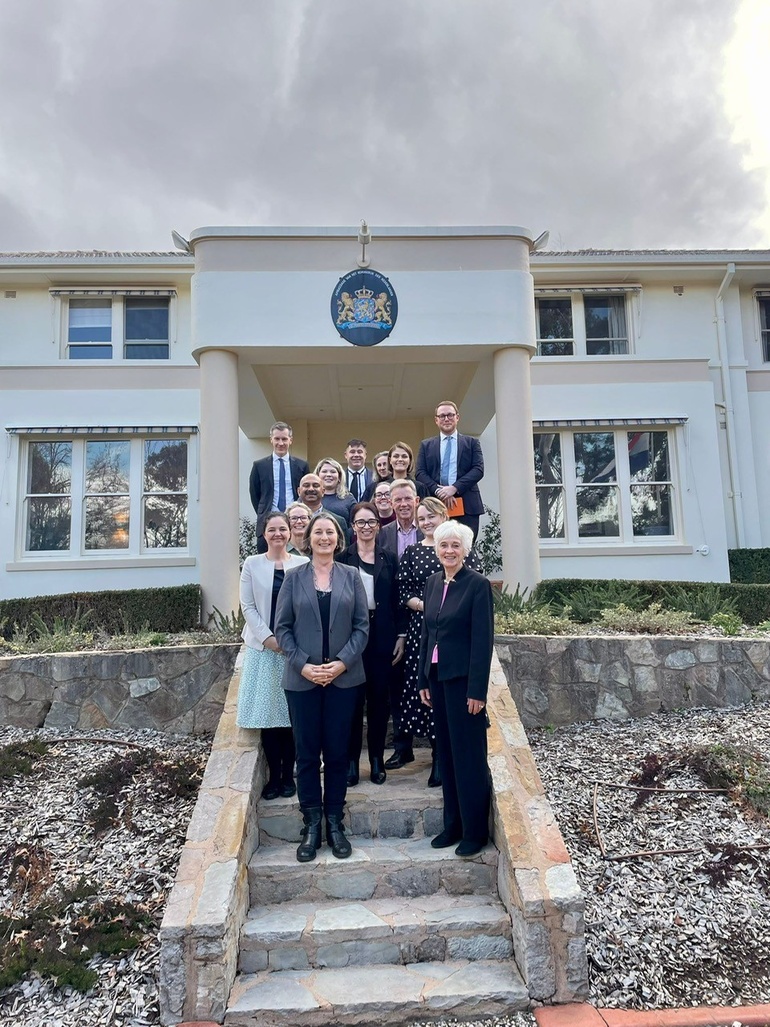
Reflecting on a busy year, we can see that ultimately, everything achieved comes back to that core goal: create places for people that are healthier, more efficient, and resilient to a changing climate. The policies introduced, the Green Star tools strengthened, and the partnerships made all contribute to that. As we move to a new year, GBCA will keep working side by side with industry and government to ensure policy translates into tangible improvements across the built environment, for everyone.