Variable geometry: Shaped locally, strengthened collectively
26 Feb 2026
In his lightning rod speech at January’s World Economic Forum, Canadian Prime Minister Mark Carney argued that it was time for the world’s middle powers to pursue a strategy of “variable geometry”. He spoke of “values-based realism” and assembling different coalitions, issue by issue, where interests were aligned.
This idea appeals to me for two reasons. Firstly, as an engineer who thinks spatially, I can see the shapes shifting, the structures flexing and the angles adjusting. But secondly, and more importantly, the green building movement offers more than two decades of practical proof. Call it variable geometry, context-led collaboration or flexible coalition building, we know it works.
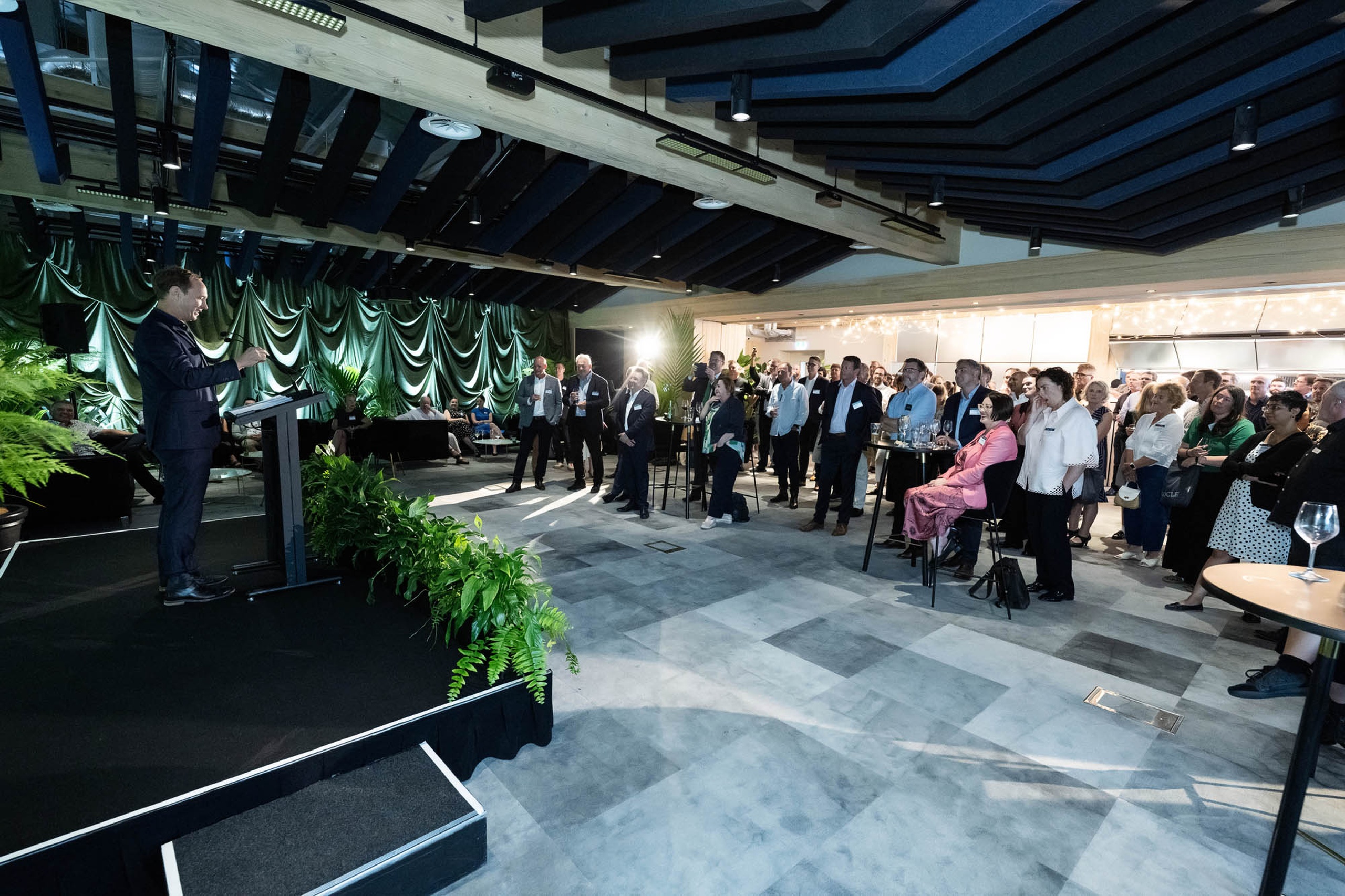
Earlier this month I flew across the Tasman to celebrate the 20-year birthday of the New Zealand Green Building Council. What a great party! It was a thrill to applaud NZGBC’s achievements in Aotearoa, including an impressive 5.5 million square metres of Green Star-rated commercial space.
NZGBC has also certified 16,000 dwellings through its own proprietary rating tool, Homestar, and this is a beautiful illustration of variable geometry. While commercial property was an area of obvious alignment for the two GBCs, the NZGBC recognised that it needed a tool reflecting its own climate and community needs. That judgement has paid off.
Next month, the NZGBC team will reverse my recent trip, joining us in Sydney for TRANSFORM 2026 and the launch of Green Star Fitouts. We’ve worked hand-in-hand with our Future Focus partners to engage with industry, build out credits across six categories and pilot projects. It’s a rating tool designed together, shaped to fit two markets, and we can’t wait to launch it.
I see the same pattern of context-led collaboration elsewhere. The Green Building Council South Africa has certified more than 23 million square metres of space across 12 African countries. As it approaches its own 20-year milestone in 2027, the GBCSA team (soon to be led by new CEO Georgina Smit) works with Green Star, but also adapts its approach to meet the needs of its unique market.
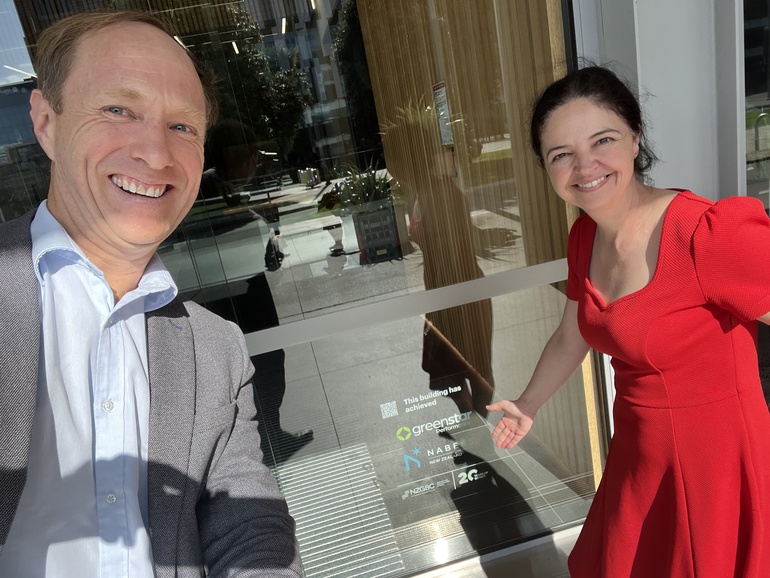
Our enduring collaboration with NABERS – this month evidenced in our case study of Frasers Property Industry’s The YARDS – is another example of how shared ambition takes different forms.
Variable geometry acknowledges the reality that markets differ by climate, capital flows, regulation, skills and culture. Rather than erase those differences, we work with them when it makes sense.
Some of the partners who help us translate global ambition into practical local solutions will join us for TRANSFORM 2026 – people like GRESB’s Chris Pyke, CRREM Foundation’s Andrea Palmer, CFP Green Buildings’ Bram Adema and Jack Noonan from the International Well Building Institute.
We will also welcome several standout international speakers, including Nigel Topping, Chair of the UK’s Climate Change Committee and Marco Lambertini, Convener of the Nature Positive Initiative in Switzerland (read our Five minutes with Marco in this month’s issue).
In practical terms, variable geometry recognises that progress doesn’t come from a single global playbook or a one-size-fits-all standard. It comes through collaboration – by linking metaphorical arms across markets, disciplines and institutions – and staying grounded in common values.
And for GBCA, variable geometry, anchored in values-based realism, means staying true to our purpose: leading the sustainable transformation of the built environment.