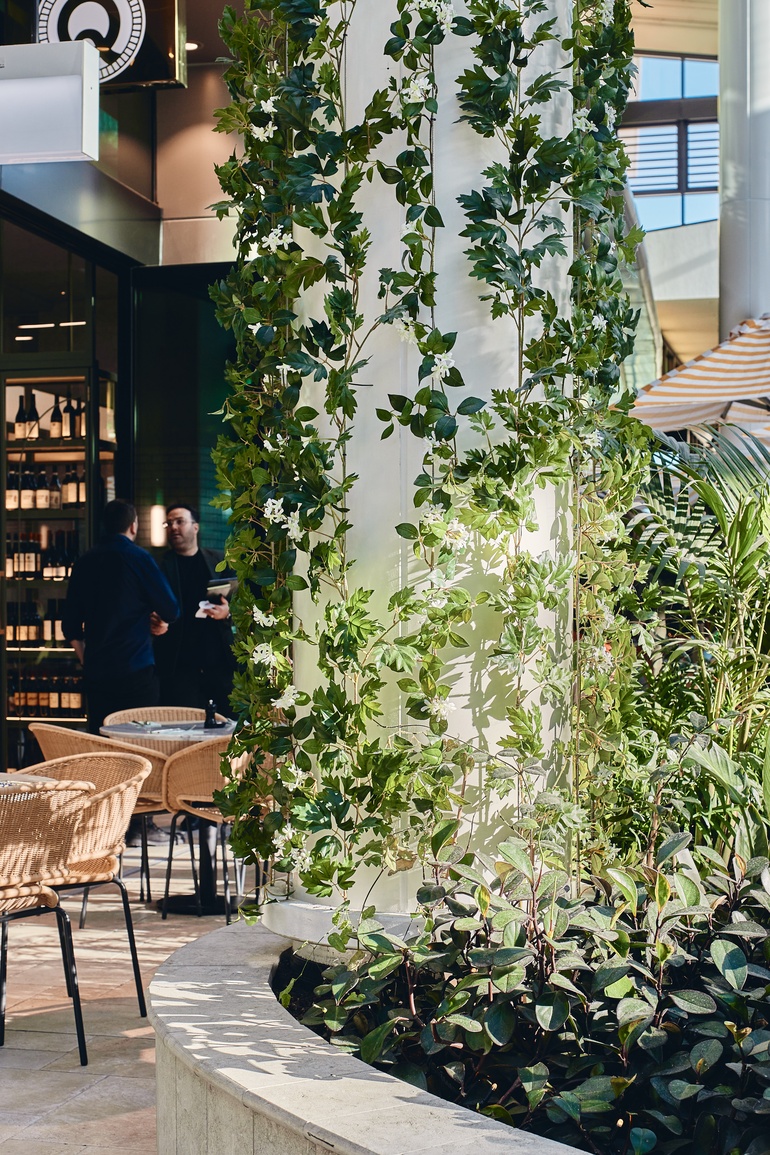
Sitting on the elevated, western side of Chadstone Shopping Centre in a lush, urban oasis, is The Social Quarter, a destination that has reinvigorated Melbourne’s world-renowned, retail-led precinct.
Owned and developed by Vicinity Centres, The Social Quarter, with a 5 Star Green Star Buildings rating representing Australians Excellence in better, healthier and more responsible buildings, has reimaged what retail centres can be.
These retail centres, initially designed as simple destinations for weekly grocery shopping, we are now envisioned as highly efficient spaces for entertaining, dining and exploration, with the wellbeing and comfort of visitors at their core.
Green Star ambitions
Although Vicinity Centres did not initially intent to target a Green Star Buildings rating for the project, ADP Consulting’s encouraged the pursuit of the rating during the tender process. For those involved, the scale of the project along with its use of an existing structure made it an ideal test run for Green Star Buildings before rolling it out to major Vicinity Centres projects in the future.
“Through the pursuit of achieving a certified Green Star Buildings rating, The Social Quarter delivers sustainability benefits that can be benchmarked against best practice projects, both within Vicinity’s portfolio and across the wider industry,” said Vickie Huang, Associate at ADP Consulting.
“The independent certification process gives stakeholders confidence that those results are genuinely achieved.”
Designed with intent
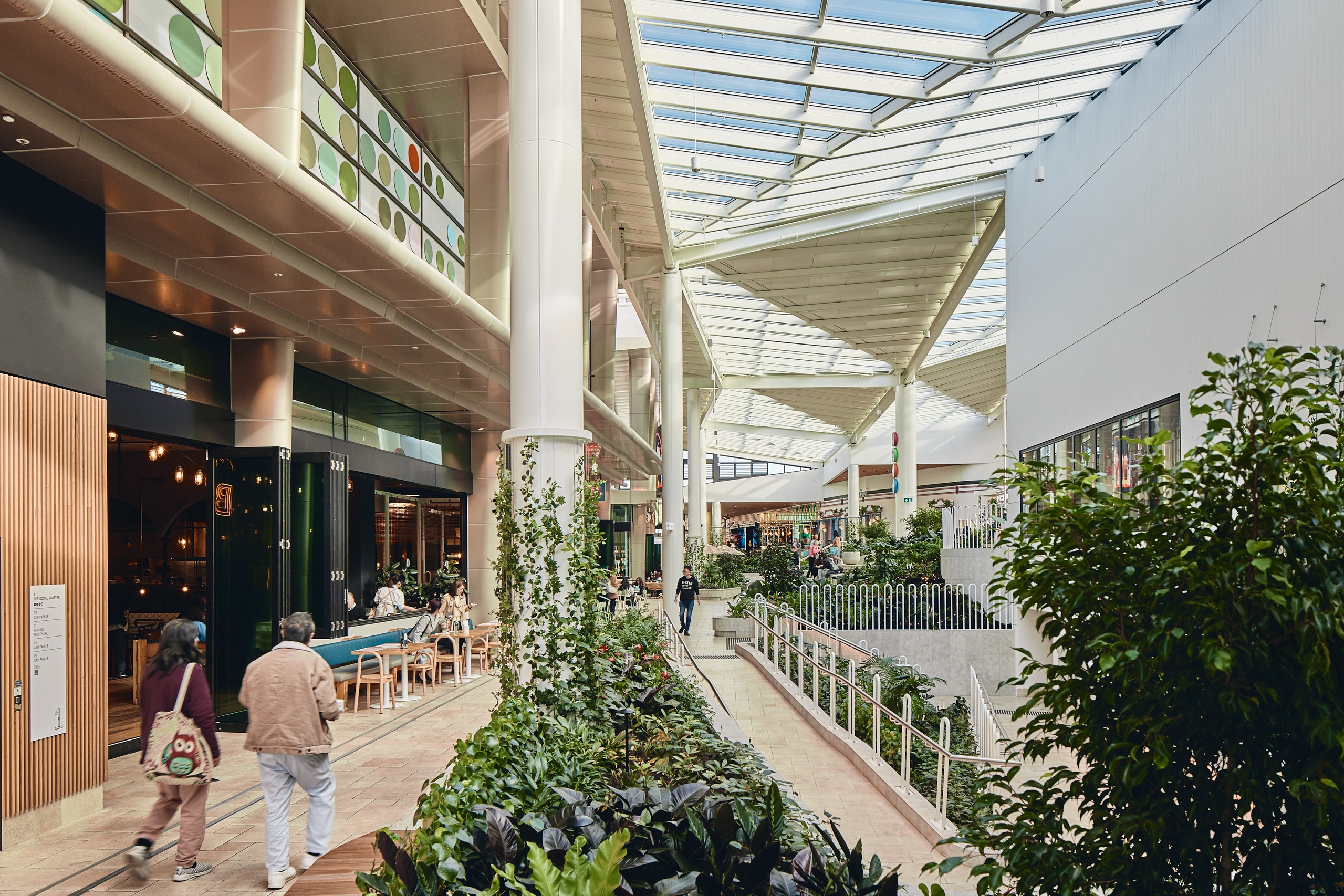
Buchan Architects, in collaboration with LatStudio, were engaged to design a new terrace for the centre, creating a refreshed shopping experience. Drawing inspiration from traditional greenhouses, the indoor terrace operates as a naturally ventilated space with a spill air strategy from adjacent tenancies, providing visitors with a warm sunny aspect throughout the year.
BMS-controlled louvres allow for the indoor terrace to take advantage of the external environment, when conditions allow, while the outdoor terrace further opens up the space, providing a sunny respite with a sweeping view over the treetops.
The vision was to create an all-season entertainment precinct, which drove many vital decisions in architecture, building services, and landscaping. With this vision embedded into the core of the project, the Social Quarter’s strongest Green Star category was Healthy. The resulting space is bright, naturally illuminated, and comfortable all year round.
For Vicinity Centres the vision led to design decisions that required thorough testing to ensure it supported a comfortable thermal environment.
“This design vision evolved into an extensive skylight system serving the central concourse, known as the Internal Terrace, with alternating solid elements to help manage unwanted heat gains and provide some diffusion of sunlight into the space,” explained Huang.
Thermal performance and modelling
While the Internal Terrace was not treated as part of the thermal envelope, enhanced skylight systems and solid panels were incorporated to support a comfortable thermal environment. Thermal-comfort modelling undertaken during design strengthened the confidence of the project team, with subsequent BMS sensor data has confirmed that actual conditions closely align with the modelling predictions.
After The Social Quarter opened to the public, ADP Consulting undertook a review of temperature sensor data from the BMS within the internal terrace. From this, the team were able to demonstrate that the actual conditions reflected those predicted by models during the design phase. The validation of this data provided the project team with confidence and sense of achievement that the considered design decisions, spill-air strategy and uplifted building fabric performance were worth it.
Standout sustainability features
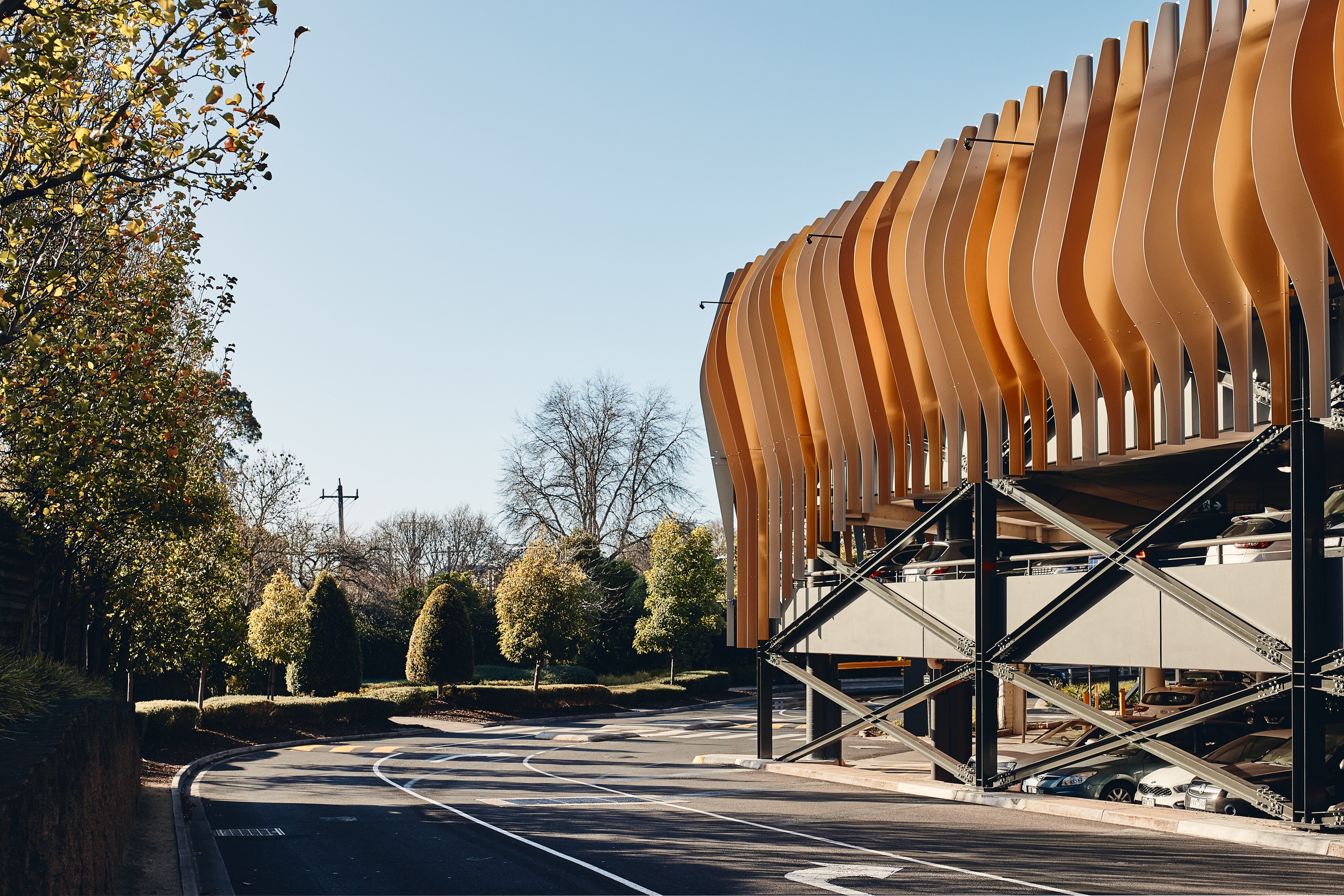
- Adaptive reuse: Re-using existing structures reduced the embodied carbon of the project from the outset.
- Energy efficiency: An upgraded thermal envelope and the inclusion of a 199kW rooftop solar photovoltaics elevates the building’s energy performance by more than 30%.
- Connection to nature: By alternating skylights and solid roof panels within the Indoor Terrace, a balanced approach to daylight and thermal comfort is achieved. The biophilic design is complemented with gardens set to 500mm, allowing visitors to touch the plants as they move through the terrace.
- Health and wellbeing: A seamless integration of indoor and outdoor spaces, particularly within the Indoor Terrace, promotes natural ventilation, access to daylight, and visual connection to the outdoors.
“As this was our first Green Star Buildings project, our GBCA project coordinator was on speed dial,” said Huang.
“They were incredibly helpful in interpreting the submission guidelines in a way that made sense for retail projects and provided guidance on which queries were better suited to a Technical Question.”
And the team’s words of advice?
“Play to your project’s strengths and take the time to bring your retailers along on the journey. It is important to bring everyone together early in the project and workshop what Green Star means for your specific project,” suggested Huang.